
According to the guidelines, a unified licence will have three levels -- national, service area and district.

Telecom Regulatory Authority of India has obtained the quality management system certificate licence under ISO 9001:2000 from Bureau of Indian Standards.
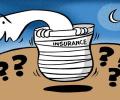
'Some of the astounding proposals, if translated into statutory provisions, would be suicidal.' 'This would not be a wonder cure for increasing insurance penetration and only result in mushrooming growth of players like paan kiosks with deleterious consequences.'

Markets regulator Securities and Exchange Board of India (Sebi) is stepping up efforts to ease the onboarding of foreign portfolio investors (FPIs) and has constituted a cell for consultations with offshore investors and custodians, said whole-time member Ananth Narayan. Sebi is also working to make regulations more "light-touch" for FPIs that invest exclusively in government securities or are sovereign funds. The regulator is trying to make the registration process easier for such FPIs, the Sebi official said at the CII Financing 3.0 Summit in Mumbai.
The EC is yet to decide on RBI's request to grant new licences during the election season.
"We have tapes to show that the channel had violated the provisions of the Cable TV Network Regulation Act by showing illegal scenes," Information and Broadcasting Secretary Navin Chawla said.

The Union Cabinet on Wednesday approved revision in guidelines for providing direct to home (DTH) services in the country under which licenses would be issued for 20 years, Union minister Prakash Javadekar said. The Union Cabinet has also approved 100 per cent FDI in the DTH broadcasting services sector, Javadekar said, adding that while the commerce ministry had spoken of 100 per cent FDI in the DTH sector, the guidelines of the information and broadcasting ministry needed to be changed.

Regularly monitor your account for any suspicious activity. Keep your devices updated with the latest security patches to prevent vulnerabilities. Ensure the physical wallet you use is stored securely to avoid loss or theft.

RBI's exercise will take into account standards of governance, the viability of the payment bank (PB) business model, and changes, if any, if needed.
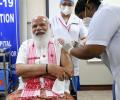
Covaxin was found to have 78 per cent efficacy against COVID-19 of any severity, 14 or more days after the second dose, and is extremely suitable for low- and middle-income countries due to easy storage requirements, said the global health body.
RFRL Group President A N Sethuraman on September 3 filed three separate applications with the Petroleum and Natural Gas Regulatory Board for licences to sell CNG to automobiles and piped gas to households in Mumbai, Delhi, Gurgaon, Faridabad etc.
Trai also recommended allocation of 3G spectrum in the 2.1 GHz band through auction in tranches of 2x5 MHz. And if this spectrum band was not adopted, it would be possible to provide spectrum only to two to three operators, apart from state-owned companies (Bharat Sanchar Nigam Limited and Mahanagr Telephone Nigam Limited).

A department of telecommunication official said the regulator has already put questions relating to uniform licence fee to the stakeholder in its consultation paper 'Overall Spectrum Management and Review of License Terms and Conditions'.

Going by the RBI directive and the overall narrative, Paytm may have lost the rigour of stress tests, audits and compliance.
In a major blow to Reliance Energy's plans to expand its business in power sector, the Central Electricity Regulatory Commission has rejected the application of the Anil Ambani-controlled company for a transmission licence.

The application of Anil Ambani Group company Reliance Infrastructure (R-Infra) for an extension in its existing power distribution licence to the suburbs of this metropolis has been rejected. It has, instead, been told to join the competitive process for a new one, with four other bidders.

Minister of State for Health Bharati Pravin Pawar said 642 prosecutions were launched for manufacturing, sale and distribution of spurious/adulterated drugs, while 262 persons were arrested.

Payouts to key management personnel in non-banking financial companies (NBFCs) are under the banking regulator's scrutiny. Top industry officials said this is a follow-through on the Reserve Bank of India's (RBI's) circular of April 29, 2022, which asked NBFCs in the "middle" and "upper" layer of its four-tiered scale-based regulatory (SBR) framework to put in place a board-approved compensation policy.

A decision on this issue is important because new operators would shy away from bidding for a standalone 3G licence if they are made to wait for years to get the UAS licence even though they have won bids for 3G. That would make the 3G project unviable from the very beginning.

In what could give a big relief to new mobile players, the Department of Telecommunications (DoT) is unlikely to cancel 53 licences - as recommended by the Telecom Regulatory Authority of India (Trai) - for non-fulfilment of rollout obligations.
The department of telecommunications has referred the issue of using multiple technologies under a single unified access services licence to the Telecom Regulatory Authority of India.

With the heat over the 2G telecom spectrum scam rising, the Telecom Regulatory Authority of India on Thursday recommended the cancellation of 34 telecom licences of companies, including Etisalat, Uninor, Loop Telecom and Siestema, due to non-compliance of roll-out obligations.
Telecom Regulatory Authority of India on Friday hit out at cellular operators' reported move to sue it over unified licencing regime saying countries worldwide were moving towards the same.

Tech and startup industry bodies have again pushed back against calls by telecom operators to bring over-the-top (OTT) services under a licensing regime similar to telcos, and open them up to taxation. Ahead of public consultations on the issue later this week, the Internet & Mobile Association of India (IAMAI), Nasscom and the US India Strategic Partnership Forum (USISPF), among others, have written to the government arguing against such efforts.

Telcos propose licence regime for apps like WhatsApp, Skype.

Out of total 5,842 registered water packaging units, 1,495 units have both BIS and FSSAI licences, while 4,347 units have only BIS certification.
The Brihanmumbai Electric Supply and Transport Undertaking demanded on Thursday that the Maharashtra Electricity Regulatory Commission revoke the licence of Reliance Energy (REL) and give BEST the right to supply power to Mumbai suburbs. At present, REL caters to the suburban areas and BEST a major part of the city. In fact, MERC had asked both BEST and REL to sign power purchase agreements with TPC.
Sebi's mandate restraining mutual funds, stock brokers, and other intermediaries from associating with finfluencers who do not come under the Sebi ambit will impact the earnings of finfluencers through sponsorships, tie-ups, or referral links, as these may dry up due to the restrictions.
The regulator has suggested that all spectrum will be auctioned as opposed to the current policy of bundling it with a 2G licence. A beginning has been made with the auctioning of spectrum for 3G services, which is due later this year. Trai has also suggested that licences for any telecom service should be auctioned as opposed to the current policy, where it is given on a first-come-first-served basis. The new policy is expected to be ready by the end of December this year.

The rules are being framed to maintain absolute transparency and fair play in investigations.
